Newsletter
Exclusive expert tips, customer stories and more.
If companies are so-called CRITIS operators or NIS-2 institutions, they are regulated by law with regard to cybersecurity,
As a manufacturer of video surveillance solutions, we are responsible for the security of our products – especially in the use and context of critical infrastructures (KRITIS) and under the new European NIS-2 Directive. The Network and Information Security Directive 2 (NIS-2) is an EU directive designed to strengthen cybersecurity in key sectors and industries. It expands the scope of the previous NIS-1 Directive and introduces stricter requirements and sanctions. Affected operators and companies must better protect their network and information systems and report security incidents.
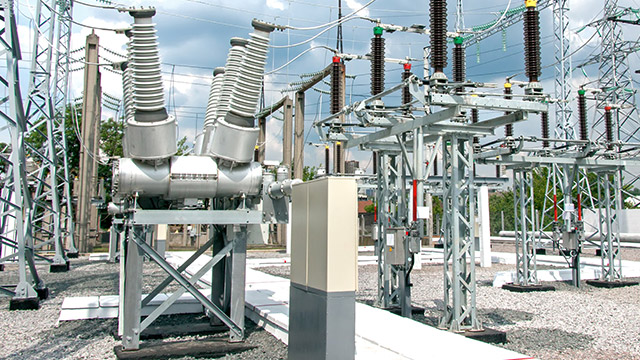

All regulations on CRITIS cyber security are always about ensuring appropriate organizational and technical precautions to prevent disruptions to the
of information technology systems, components or processes. These must correspond to the current state of the art in order to achieve a high level of security of network and information systems.
In Germany, the NIS-2 Implementation Act came into force on December 6, 2025 (“Act Implementing the NIS-2 Directive and Regulating Essential Features of Information Security Management in the Federal Administration”). As an omnibus bill, this German implementation act amends many individual laws, but above all the BSI Act, which is the most important law governing the tasks of the BSI and the security of information technology in institutions. Instead of the previous approximately 4,500 institutions (CRITIS operators, companies of particular interest (UBI), and other special cases), around 30,000 organizations will in future be placed under the regulatory supervision of the BSI (Federal Office for Information Security).
You can find more information on this topic, including our technical and organizational solutions and answers, in our blog article: NIS-2 Directive to enhance cybersecurity across the European Union
Dallmeier supports affected NIS-2 institutions in meeting their requirements under the European NIS-2 Directive with cyber-secure video security solutions.
Dallmeier products and solutions have the highest level of technical precautions and functions that enable customers and CRITIS operators to implement cybersecurity-compliant video security solutions.
Dallmeier stands for the highest level of security in terms of law and compliance, data protection and cybersecurity:

| NIS-2 requirement | NIS-2 Directive (EU) | NIS-2 Implementation Act / BSIG (Germany) | Dallmeier ISO 27001 | Dallmeier as upstream supplier/manufacturer |
|---|---|---|---|---|
| State of the art | Article 21 (1),EG 85 | § 30 | ISO 27001 = technology-neutral ISO as the basis for state-of-the-art IT security (TeleTrust guideline) + state-of-the-art video surveillance technology | ✓ |
| Security by Design | Article 21 (2) e) | § 30 | A.5.20, A.5.24, A.5.36, 5.37, A.6.08, A.8.09, A.8.19, A.8.20, A.8.21 | ✓ |
| Supply chain security | Article 21 (2) d),Article 21 (3) | § 30 | A.5.19, A.5.20, A.5.21, A.5.22, A.5.23 | ✓ |
| Integration chain security | Article 21 (2) d) and e) | § 30 | A.5.19, A.5.20, A.5.21, A.5.22, A.5.23 | ✓ |
| Regular updates and patches | Article 21 (2) e) and g) | § 30 | A.5.35, A.5.36, A.5.07, A.5.24, A.5.25, A.5.26, A.5.27, A.5.28, A.6.08, A.8.16 | ✓ |
| Authentication and authorization | Article 21 (2) i) and j) | § 30 | A.5.12, A.5.13, A.5.14, A.5.15, A.5.16, A.5.17, A.5.18, A.8.01, A.8.02, A.8.03 | ✓ |
| Cryptography and data encryption | Article 21 (2) f) | § 30 | A.8.20, A.8.21, A.8.22, A.8.24 | ✓ |
| Reporting and vulnerability management | Article 21 (2) e) | § 30 | A.5.07, A.5.24, A.5.25, A.5.26, A.5.27, A.5.28, A.6.08, A8.07, A8.08, A8.15, A8.16 | ✓ |
| Data protection through IT security | Derivation from Article 20, Article 21 (1), Article 23 (4), EG 14 and 51 | § 30 | in particular: A.5.34 Privacy and protection of personal information (PII) | ✓ |
| Training and awareness measures | Article 20 (1) and (2), Article 21 (2) d) and g); EG 88 and 89 | § 30 | A.5.1, A. 5.2, A.5.3, A.6.3, A. 5.23, A.5.28 | ✓ |
EU NIS-2 cybersecurity directive in force since November 2022:
EU Critical Infrastructure Resilience Directive in force since November 2022:

In the following, we would like to provide you with three pieces of information on our own behalf and for your CRITIS video project:
Info 1 / Top Tip: CRITIS Practical Guide to Video Technology
Info 2 / Blog post “The EU Regulatory Framework for Critical Infrastructure and other Key Sectors”
Info 3 / Blog post “Cornerstones for the CRITIS umbrella law”
Info 4 / Blog post “NIS-2 Directive to enhance cybersecurity across the European Union”
[German Version]