Newsletter
Exclusive expert tips, customer stories and more.


What does Martyn’s Law mean for UK football stadiums? Steve Hodges from Dallmeier UK explains the role of modern video security and what clubs should consider going forward.
Steve, how significant do you think Martyn’s Law will be for football stadiums?
It’s generally recognized that football clubs already operate very safe and secure environments on match days, and I would go as far as saying that football probably leads the way when it comes to event safety and security.
For me, Martyn’s Law is first and foremost about avoiding complacency. Even when existing procedures are robust and well established, we must continually challenge ourselves to ensure we’re prepared for evolving threats.
What impact do you expect the legislation to have on existing CCTV systems?
I think it will encourage clubs to take a closer look at the capabilities of their existing systems. Many stadiums already have substantial CCTV infrastructure, but the question is whether those systems are delivering the right information, in the right place, at the right time.
It’s one thing to have cameras covering a stadium. It’s another to have effective coverage of the approaches, entrances, concourses, perimeter areas and wider surroundings, with operators able to find and understand what they’re seeing.
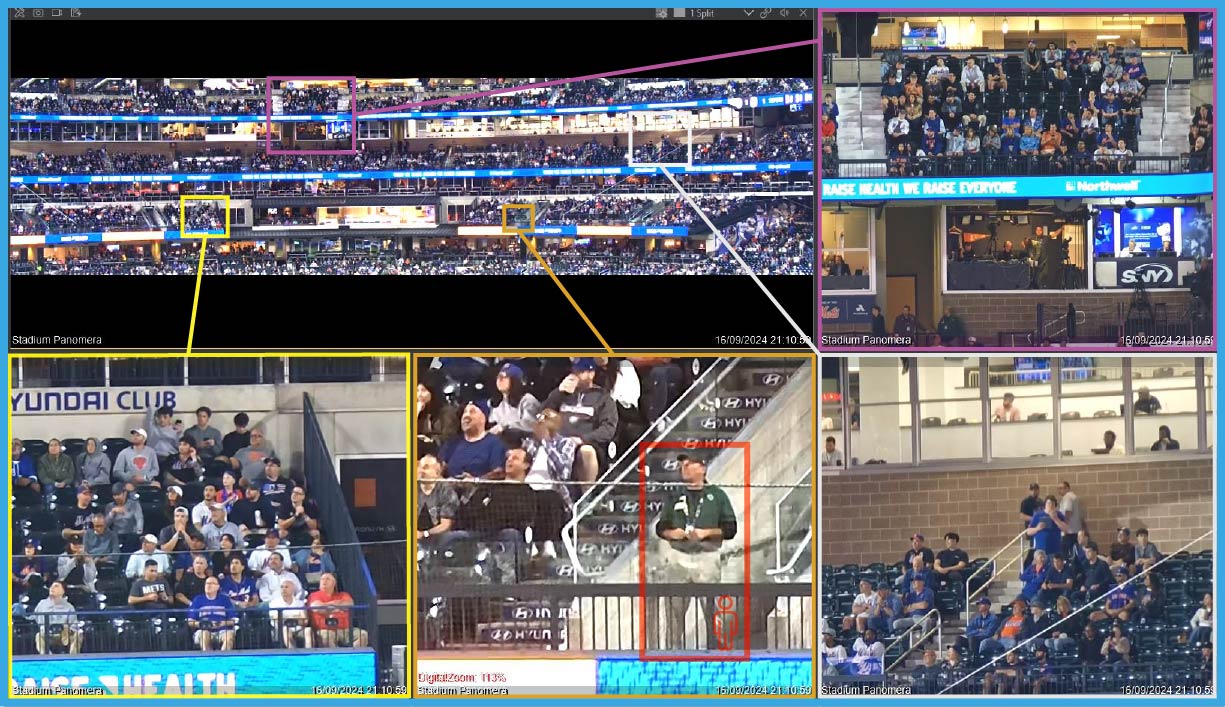
Clubs should be asking themselves some fundamental questions. Can we see the areas we need to see? Can operators identify developing situations quickly? Can we follow an incident across different areas of the ground?
I wouldn’t automatically assume that every club needs to replace its existing cameras. In some cases, a well-designed upgrade or better integration of existing equipment may deliver significant improvements.
Many stadiums have developed their CCTV systems over a number of years. They may have different generations of cameras, recording platforms and third-party systems. Bringing everything together into a coherent, reliable solution can be more complicated than installing new equipment in a new stadium.
The important thing is to assess the system against the stadium’s risks and operational requirements, rather than simply buying more cameras.
Will Martyn’s Law lead to more investment in CCTV technology?
I expect it to prompt more conversations about investment, although the scale of that investment will vary considerably between clubs.
I’d also encourage clubs to consider the long-term cost of ownership. A stadium CCTV system is a significant investment, and decisions should be based on reliability, image quality, maintainability and the ability to adapt as requirements change.
You’ve worked with multifocal sensor camera technology for many years. What role could this play?
I think multifocal sensor technology has a particularly important role to play in stadium environments.
One of the challenges with a traditional CCTV design is achieving comprehensive coverage across a large area without creating gaps in visibility. Using multiple individual cameras can mean more equipment, more infrastructure and more individual images for operators to manage.
Multifocal sensor systems, such as Dallmeier’s Panomera® technology, can provide wide-area coverage while retaining the detail needed to observe activity across a scene. Depending on the design and application, this can help operators maintain an overview of large areas without constantly switching between separate camera views.
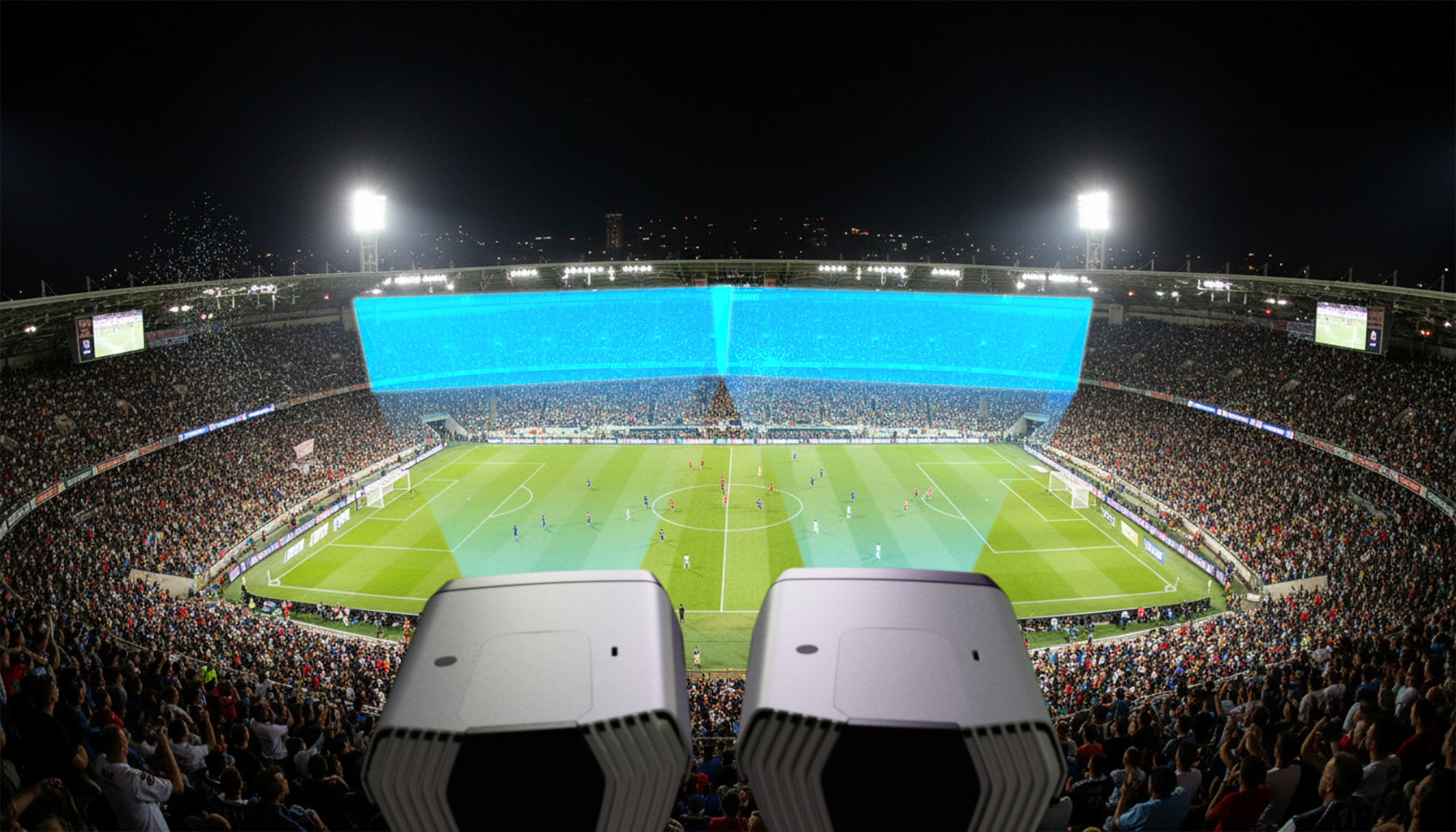
That can be valuable around stadium perimeters, approaches, entrances and public areas where understanding the wider picture is just as important as seeing an individual incident.
However, technology needs to be selected carefully. Camera positioning, pixel density, lighting, scene geometry and the intended task all matter. A wide overview is not automatically sufficient for identification, and every design needs to be validated against its operational objectives.
Ultimately, it’s about giving security teams the best possible situational awareness, rather than simply increasing the number of cameras on a site.

“The real objective is to ensure that CCTV is not simply there to tell us what happened after an incident, but to help the people responsible for stadium security understand what is happening in real time and make informed decisions when it matters most.”
Steve Hodges, Director of Operations, Dallmeier UK
How important is the integration between CCTV and other security systems?
A CCTV system on its own provides visual information. But when it is integrated effectively with access control, alarm systems, perimeter detection and other relevant security technologies, it can provide a much clearer understanding of what is happening.
For example, an alarm triggered at a perimeter could automatically bring the relevant camera views to an operator’s attention. An access control event could be linked to video, allowing the operator to verify what has happened. That can reduce the time spent searching through multiple systems and help the team make faster, better-informed decisions.
The video management platform is central to this. It should bring relevant information together in a way that is intuitive for operators, particularly under pressure.
Does CCTV need to become more proactive, rather than simply recording incidents?
Absolutely. Historically, one of CCTV’s main functions has been to record incidents so that footage can be reviewed afterwards. That remains important, but I believe its role in live security operations is just as significant.
If an incident occurs, the ability to provide operators with immediate visual information can help them assess the situation, direct security personnel and support an appropriate response.
Artificial intelligence and video analytics may also help identify certain behaviors, objects or events that warrant further investigation. Edge-based analytics can process information at the camera, potentially helping to flag relevant activity without relying entirely on an operator watching every screen.
But we need to be realistic. Analytics are not a substitute for professional judgment, effective procedures or trained staff. False alarms, environmental conditions and the limitations of individual technologies all need to be considered.
The objective should be to give operators useful, actionable information, not to overwhelm them with alerts.
How important are image quality and the ability to track incidents across a stadium?
It is fundamental. A camera may provide an excellent overview of a busy concourse, but if the image lacks sufficient detail for the intended task, its value may be limited when an incident needs to be investigated.
Stadium operators need to consider the different requirements of each area. A camera used to monitor crowd movement has a different purpose from one intended to identify an individual or capture detail at an entrance.
The ability to follow an incident across multiple cameras is also important. An event rarely remains confined to one camera view. Operators may need to understand where someone has come from, what has happened and where they have gone. That requires good camera design, appropriate image quality, effective recording and a video management platform that makes reviewing footage straightforward.
It is also worth considering how CCTV can support emergency planning. During a serious incident, operators need to understand what is happening across the ground, not just in one isolated location. That wider situational awareness can be extremely valuable when decisions have to be made quickly.
Should clubs be acting now, even though the legislation is not yet in force?
Yes, absolutely. I think clubs should be using this period to review their security arrangements and identify any areas that need attention before the legislation comes into force.
The Terrorism (Protection of Premises) Act 2025, commonly known as Martyn’s Law, received Royal Assent on 3 April 2025. The Government published statutory guidance in April 2026, and the Security Industry Authority currently expects the legislation to come into force in spring 2027. The exact date has yet to be confirmed.
I'd also stress that Martyn's Law does not mandate a particular CCTV system or camera specification. The legislation sets out specific requirements for protective security and preparedness, depending on the type and tier of the premises or event. CCTV may support a club's wider security arrangements, but it is not, by itself, a guarantee of compliance.
Finally, what would your message be to football clubs preparing for Martyn’s Law?
My message would be simple: start with the risks, understand your existing systems and plan ahead.
For me, the real objective is to ensure that CCTV is not simply there to tell us what happened after an incident, but to help the people responsible for stadium security understand what is happening in real time and make informed decisions when it matters most.
